

How Jonny Arvizu Builds Brands That Live Beyond the Logo
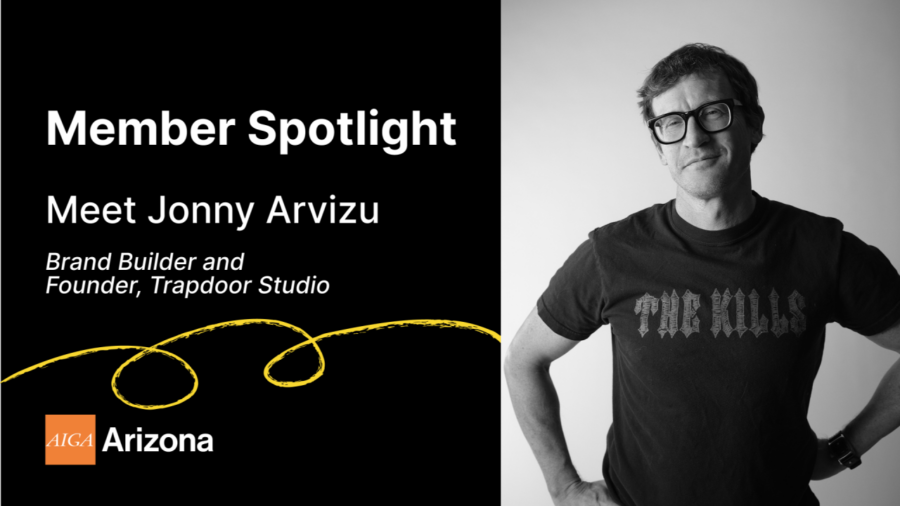
Some creatives specialize in a single discipline. Jonny Arvizu has spent more than two decades building a career by moving fluidly between them.
As the founder of Trapdoor Studio, Jonny’s work spans branding, illustration, apparel, environmental graphics, murals, and campaigns. His projects range from local businesses to globally recognized brands, but his philosophy remains remarkably consistent: great branding isn’t about creating a logo—it’s about building visual systems that help brands feel alive.
With a creative style he describes as “eclectic, illustrative, and heart-centered,” Jonny approaches every project by listening first, understanding the problem, and finding the medium best suited to tell the story. We sat down with Jonny to discuss creativity, longevity, community, and what it means to build meaningful work in Phoenix.
You describe your work as building “visual systems that make brands feel alive.” What does that mean in practice?
Branding isn’t a logo. It’s not a color palette—it’s a living process. Every project adds to an ecosystem of artwork and design that builds the brand into something larger than any single deliverable. That work compounds over time. It shows up in subtle and obvious ways, gets reused across multiple touchpoints, and becomes part of a broader marketing strategy. Strong brands are built on a solid foundation, but they never stop evolving. The assets created along the way are what actually give a brand life and depth—something a logo suite alone can never do.

Your work spans illustration, branding, apparel, and campaigns. How do you decide what medium best fits a project?
Honestly, I don’t decide—the brand does. My job is to listen to what the brand needs and where it needs to show up. A mural communicates something a logo never could. Apparel builds community in a way a campaign can’t. I just follow the problem. The medium is the last decision, not the first.
“I just follow the problem. The medium is the last decision, not the first.”
You’ve worked with both global brands like Netflix and local businesses. How does your approach shift between those two worlds?
The approach doesn’t change. The room does. With a global brand, there are more stakeholders, more existing guardrails, and more alignment work before a single mark gets made. With a local business, you’re often sitting across from the owner—the person whose name is on the door. Both demand the same thing: understand what they’re trying to build and help them build it better. The scale changes the process. It doesn’t change the goal.
You’ve been running Trapdoor Studio since 2002. What has kept your work evolving over such a long period of time?
Honestly? Stubbornness and love. I love this work—the making of it, the solving of it, the way it keeps changing. I make it a point to keep evolving, not because the industry demands it, but because standing still isn’t interesting to me. Then there’s the endurance side: learning to move through hard seasons without losing your integrity or burning your relationships. Twenty-six years is a lot of hard seasons. The people who last treat others well and care about the work. That’s the whole formula.
When starting a project, are you thinking more like an illustrator, a designer, or a strategist—or all at once?
More like a creative director. I’m not waiting to be handed a brief and told which hat to wear. I want to understand the whole picture first: what the brand needs, where it’s going, and what it’s trying to say. Then I figure out how to say it. The illustrator, designer, and strategist are all there—I just don’t treat them as separate jobs.
Your work often feels cohesive across many touchpoints. How do you build systems that can grow with a brand instead of limiting it?
You have to understand what the brand is actually rooted in: its culture, its community, and its history. That’s where the system comes from. Not just the colors and the logo, but the deeper things that give those elements meaning. When you build from that foundation, the work has room to stretch. When the work is doing its job, you don’t analyze it. You just feel it. It looks right. It fits.

You’ve mentioned the importance of creating work that “fits its intended use.” How has thinking about production and real-world application shaped your design mindset?
I like having parameters. Knowing the constraints is half the job. A billboard has two seconds. A mural needs to earn a photo. Wayfinding graphics in Arizona have to survive 115-degree summers for years at a time. Every one of those conditions changes how you design. It’s taught me that good work isn’t just something that looks right on screen—it’s something that holds up in the real world, in the actual environment it was made for. That’s the standard I design to.
You’ve contributed a lot to the Phoenix creative scene through local collaborations and projects. What does being part of that community mean to you?
It means connection. Working independently can get isolating, and the creative community here is where I find people who speak the same language, who care about craft, push the work, and take design seriously. But it’s also about investment. Phoenix has real creative momentum right now, and I feel a genuine responsibility to contribute to it—not just benefit from it. The scene is only as strong as the people who show up for it.
“Working independently can get isolating, and the creative community here is where I find people who speak the same language, who care about craft, push the work, and take design seriously.”
What role do you think designers and illustrators play in shaping the identity of a city like Phoenix?
An integral one. Designers shape how a city feels, whether anyone credits them for it or not. A well-designed space makes you happy. A rundown strip mall with bad signage makes you feel things too—just differently. Phoenix has a strong mural culture, and the design and illustration community is a huge part of what gives this city its visual character. The good news is developers are starting to recognize that. More creative teams are being brought in early to help define spaces intentionally. The city looks different because of it.
What sets AIGA Arizona apart from other creative communities, and why should others consider getting involved?
It’s accessible and it’s real. AIGA Arizona isn’t about gatekeeping—it’s about cross-pollination. The more people get involved, the more collaboration happens, the better the work gets, and the stronger the argument becomes for why design matters in this city and state. That case is still being made. The more of us making it together, the better.

How has AIGA helped you in your creative journey? Why are creative communities important?
A creative community is the third space—the place beyond home and work that gives life dimension and connection. AIGA is that space for designers. It’s a hub where wildly different disciplines, practices, and perspectives converge around a shared goal: make beautiful things, communicate effectively, and do meaningful work. That common language is what makes it work. Beyond the community it builds today, AIGA also plays an important role in elevating the next generation of creative professionals.
“A creative community is the third space—the place beyond home and work that gives life dimension and connection. AIGA is that space for designers.”
What advice would you leave aspiring creatives who hope to follow a similar path?
Do the work for others, but don’t stop doing work for yourself. Stay passionate because it matters to you—not because it leads somewhere comfortable. It usually doesn’t. Art is about sitting with discomfort and making something out of it—something that didn’t exist before you came along. That’s worth protecting. Don’t let the career swallow the calling.
Follow Jonny on Social
LinkedIn | Instagram | Website
Don’t Miss Out on Upcoming AIGA Arizona Events!
Follow AIGA Arizona on Eventbrite for updates
🧡 AIGA Arizona is made possible because of members like you.
AIGA Arizona is a 501(c)(3) nonprofit organization, sustained by the support of our members. Our creative community fuels everything we do — and it’s your passion and involvement that make AIGA Arizona a place to grow, connect, and inspire.