

Meet Angelique: Building Belonging Through Art at the Heart of Phoenix
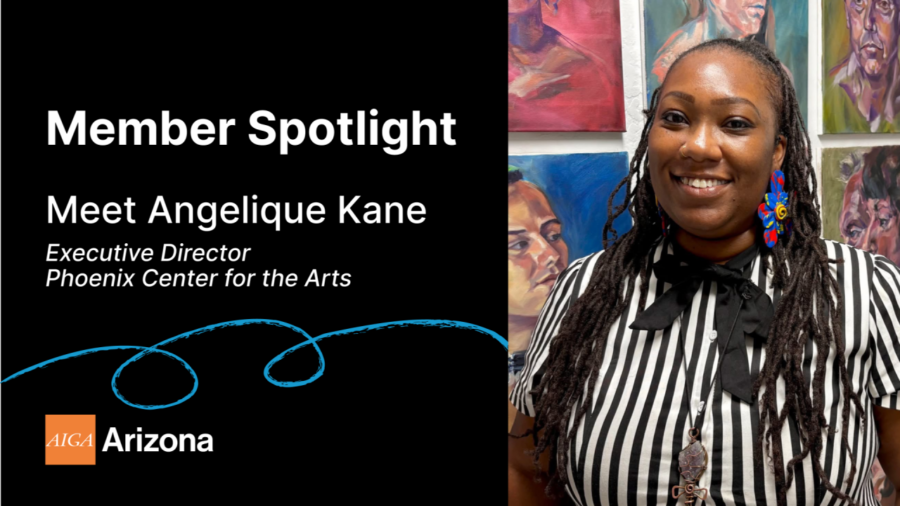
In a city growing as quickly as Phoenix, community doesn’t just happen—it’s built. And often, it’s built in the spaces where people are invited to show up as they are. At Phoenix Center for the Arts, that work is being led by Angelique N. Kane, whose path into arts leadership was shaped by a deep understanding of people, connection, and care.
With a background in social work and a belief that creativity belongs to everyone, she’s focused on creating spaces where participation matters more than perfection—and where belonging comes first. We sat down with Angelique to talk about leadership, community, and why art isn’t just something we make—it’s how we move through the world.
For those just meeting you: what’s the story behind your creative journey, and how did it lead you here?
My creative journey has always been less about a finished product and more about the experience of getting there. I grew up in environments where creativity was encouraged through curiosity by making things, asking questions, and being surrounded by people who expressed themselves through art. That early exposure taught me that creativity isn’t exclusive or precious but instead that it’s something everyone already carries.
I began my career in social work, which shaped how I listen, lead, and build trust. Over time, I kept seeing how art created connection (opened conversations, strengthened relationships, and helped people feel like they belonged). With this realization, I organically gravitated toward arts leadership.
Now, my work centers on creating spaces where people don’t have to “be artists” to participate. They just have to show up. I’m focused on the journey: building community, nurturing curiosity, and making creativity feel accessible, human, and shared.

You stepped into the role of Executive Director at Phoenix Center for the Arts in 2025. What has the first year in this role been like for you?
The first year has been full. Stepping into this role felt like walking into a living, breathing ecosystem with deep roots and big potential. I spent a lot of time listening and learning the history of the organization, building trust with staff and community, and really paying attention to what people need and hope for.
There were moments of excitement and momentum, and moments that required patience and care. Much of the work has been about strengthening our foundation by clarifying systems, tending to relationships, and making sure The Center feels welcoming, accessible, and aligned with its values. I’ve learned quickly that progress sometimes looks like slowing down, asking better questions, and making space for collaboration.
I’ve learned quickly that progress sometimes looks like slowing down, asking better questions, and making space for collaboration.
Overall, the first year has been a reminder that leadership is about stewardship by holding space and keeping the focus on people.
Your leadership emphasizes empathy and trauma-responsive practices. How do those values shape the way you approach arts leadership?
Empathy and trauma-responsive leadership start with relationships. In my first year, that meant a lot of meetings to listen, observe, and understand. That time was intentional. I wanted to learn how people experience The Center, what matters to them, and how their lived experiences shape their work.
This kind of collaborative approach is slow and steady, but it builds trust and leads to better, more informed decisions. It also creates real buy-in because we’re building together, not because something is being handed down. When people are invited into the process, they show up with authenticity that brings wisdom, perspective, and solutions I couldn’t arrive at alone.
I don’t lead from the belief that I know everything. I lead knowing that I’m resourceful. I value bringing the right people to the table, identifying gaps, and finding partners, staff, or community voices who can fill them. When people feel seen and respected, they contribute fully and that’s when creative spaces truly thrive.
“When people feel seen and respected, they contribute fully and that’s when creative spaces truly thrive.”
In your view, how do art and creative spaces influence the social fabric of a city like Phoenix?
Art and creative spaces help a city feel like a community rather than just a collection of buildings. In a place like Phoenix (where growth and migration are constant), creative spaces offer a shared language. They give people places to gather, tell stories, and see themselves reflected in one another. At their best, these spaces slow things down and invite connection across differences.
Creative spaces strengthen the social fabric of Phoenix by building belonging. Trust grows when people feel welcome to show up, express themselves, and be seen. That trust between neighbors, artists, families, and institutions is what allows a city to transform into a community.

Community seems central to your work. What does a truly inclusive arts community look like to you?
A truly inclusive arts community is one where people feel they belong BEFORE they are expected to perform or prove anything. That’s why at Phoenix Center for the Arts, we encourage everyone to participate because we genuinely believe that everyone is an artist. Some people may have leaned into their creativity earlier or more visibly, but creativity isn’t limited to formal training or traditional art forms.
We believe art is for everyone because we are all creating something all the time…even in moments of stillness. Stillness can be a creative act. Mindfulness supports creativity by helping people focus, quiet self-criticism, reduce stress, and make space for new ideas. When people feel grounded and present, they’re more open, flexible, and willing to explore.
This philosophy is at the heart of our p(ART)icipate program, which is designed to create accessible entry points into creativity and connection. p(ART)icipate removes the barrier of needing prior experience and invites people to engage at their own pace. The goal isn’t perfection or output. The goal is participation, curiosity, and belonging.
An inclusive arts community values different ways of showing up. It centers lived experience, invites collaboration, and recognizes that creativity thrives when people feel safe, respected, and seen. When we build spaces with that intention, art becomes a shared language and the community grows stronger because everyone has a seat at the table.
“An inclusive arts community values different ways of showing up. It centers lived experience, invites collaboration, and recognizes that creativity thrives when people feel safe, respected, and seen.”
You’ve said that “Art is not a thing; it is a way.” What does that philosophy mean to you personally?
The quote “Art is not a thing; it is a way” comes from Elbert Hubbard (an American artist, writer, and philosopher who played a key role in the Arts and Crafts Movement). His work emphasized intention, integrity, and the idea that HOW something is made matters just as much as WHAT is made. That philosophy has always resonated deeply with me.
I’ve loved arts and crafts for as long as I can remember, largely because I watched my mom (an event designer) create constantly. I witnessed firsthand that creativity wasn’t just about aesthetics and requires a great deal of planning, problem-solving, storytelling, and care. Creation is thoughtful, relational, and purposeful. That resonates with me deeply.
“Creation is thoughtful, relational, and purposeful.”
My background in human services and social work gives me the language and training to understand that same idea from another angle: outcomes don’t happen in isolation. If you take time to explore root causes, lived experiences, and systems, then results are stronger and more authentic. When you approach anything holistically (people, programs, or art), the outcome holds because it’s honest.
I believe in multiple truths. So, of course I still operate with deliverables as an Executive Director AND this philosophy is a reminder that there’s an ethical map to every outcome. The process, the relationships, and the intention matter. This quote explores art as a way of moving through the world with care, curiosity, and integrity so that what we create reflects who we truly are and what we value.

What initiatives or programs are you currently most focused on developing at the Center?
Right now, we’re focused on activities that invite participation, deepen connection, and support the whole person through creative expression. We’re currently registering for our Summer session, and there’s still time to join us for Spring classes, which run through the end of May. Some of the programs I’m especially excited about include:
- p(ART)icipate: offers low-barrier entry points into creativity
- Canvas of Courage: veteran-led expressive arts therapy to support healing and well-being for veterans and their families
- Lit Lounge: series of author talks and book club meetings to create space for writers and readers
- Storytelling CO-hort (in partnership with CO-Media): a communal program that offers hands-on education and opportunities for individuals interested in film, TV, and media production
This summer, we’re also proud to host five independent summer camps across our Downtown Phoenix and Thunderbird Arts Center (North Phoenix) campuses: Rising Youth Theatre, School of Hip Hop, Skye’s the Limit Foundation, My Hair Is Beautiful, and the Mountain View Community Center. These partnerships allow us to expand access to creative learning while uplifting community-led youth programming.
To stay connected, follow Phoenix Center for the Arts on LinkedIn, Facebook, Instagram, TikTok, and YouTube. Our handle (@PhoenixCenterForTheArts) is the same across all platforms. That’s where we share what’s happening now and what’s coming next.
Looking ahead a few years, what impact do you hope your leadership will have on Phoenix Center for the Arts and the broader Phoenix arts community?
Looking ahead, I hope my leadership continues to root Phoenix Center for the Arts in trust, care, and shared purpose. I don’t plan on going anywhere anytime soon because this work is deeply aligned with my personal values and I’m committed to tending it over time. My goal is for the Center to remain a place where people feel genuinely welcomed, supported, and empowered to explore creativity in ways that are meaningful to them, with strong systems and relationships that can grow steadily and sustainably.
For the broader Phoenix arts community, I hope my impact shows up in how we work together. I want to contribute to a culture that values collaboration over competition and relationship-building over rush. If my leadership helps strengthen connections across artists, organizations, and partners while expanding who feels invited into creative spaces, then we’re moving in the right direction.
Ultimately, I want my legacy to be a lived example of the idea that “art is not a thing; it is a way”. A demonstration that when we lead with intention, integrity, and curiosity, the outcomes are more authentic and lasting. Not just WHAT we create, but how we create, together.

Is there a mantra, philosophy, or quote that guides your work or life?
Yes! Sankofa is a guiding philosophy in both my life and work. Sankofa is a West African concept that means to go back and fetch what was left behind. For me, it’s a reminder that moving forward requires reflection, honesty, and respect for what has shaped us.
Is there anything else you’d like us to know?
I’d just like people to know that my door is always open and whether someone considers themselves an artist or not, there’s space for them here at Phoenix Center for the Arts. I’m always excited to meet others who are interested in building, learning, and creating together. If you’re looking for a place to belong, explore, or simply pause and reconnect, we’re here.
Follow Phoenix Center for the Arts
LinkedIn | Facebook | Instagram | TikTok | YouTube.
Don’t Miss Out on Upcoming AIGA Arizona Events!
Follow AIGA Arizona on Eventbrite for updates
🧡 AIGA Arizona is made possible because of members like you.
AIGA Arizona is a 501(c)(3) nonprofit organization, sustained by the support of our members. Our creative community fuels everything we do — and it’s your passion and involvement that make AIGA Arizona a place to grow, connect, and inspire.